
UPI MDR Charges Explained 2026: What Changes on October 15
UPI stays free for consumers. Understand the new merchant-side MDR, ₹2,000 threshold, exemptions, special rates, and your rights from October 15.
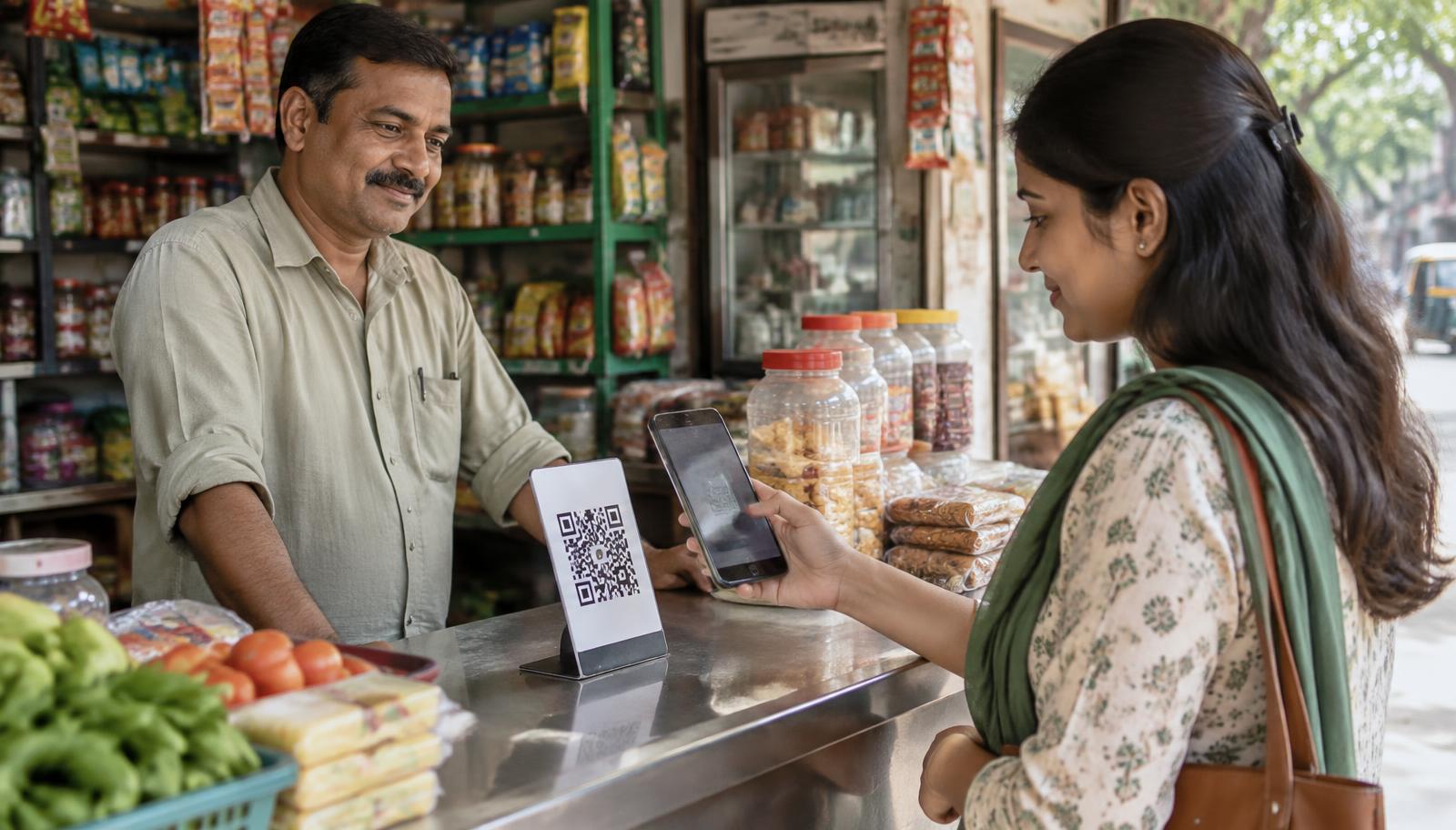
You may have seen alarming messages saying, “UPI is no longer free from October.” If your first thought was about paying extra for chai, groceries, rent, or sending money to your parents, take a breath.
Consumers will not pay an extra charge under the new framework. Person-to-person transfers remain free, and ordinary merchant payments of ₹2,000 or less remain free too. The change, due to take effect on 15 October 2026, introduces a Merchant Discount Rate (MDR) for a limited set of larger person-to-merchant payments. That fee sits on the merchant side of the transaction.
This distinction matters because “UPI charges” is a catchy headline but a poor explanation. The new rules do not turn every scan-and-pay transaction into a paid service. They are designed to make businesses that receive certain larger digital payments contribute to the cost of running the UPI network, while protecting consumers, small merchants, and everyday payments.
Here is what changes, what stays free, and what you should do if somebody tries to add an “UPI fee” to your bill.
The Big UPI Change Everyone Is Talking About
From 15 October 2026, selected person-to-merchant, or P2M, UPI payments above ₹2,000 will attract MDR. The standard rate is 0.4% of the transaction value, subject to a cap of ₹300 for transactions of ₹75,000 and above. The fee is payable within the payment ecosystem by the merchant side; it is not meant to appear as an additional charge for the customer.
Let us translate that into a familiar situation. Suppose you buy a phone for ₹25,000 and pay by scanning the electronics shop's UPI QR code. You authorise ₹25,000, and ₹25,000 is what should leave your account. The merchant may incur MDR as a business cost, just as merchants already account for rent, card-processing charges, delivery commissions, and other operating expenses.
If you pay ₹450 at a kirana shop, nothing changes. If you send ₹30,000 to your sibling's personal UPI ID, nothing changes. If your monthly SIP is collected through UPI AutoPay, the prescribed MDR does not apply to that recurring mandate. These are different types of payments, even though they may all look similar inside your UPI app.
The Government's official clarification says all P2P transfers and around 96% of merchant transactions will remain outside the new charge. It also explicitly says customers are not required to pay a charge on qualifying UPI payments. You can read the official PIB clarification and the NPCI FAQ on select P2M transactions.
So the plain-English summary is simple: UPI remains free for consumers. A limited merchant-side fee begins on some larger commercial payments.
What Is MDR and Why Is It Being Introduced Now?
MDR stands for Merchant Discount Rate. Despite the slightly confusing word “discount,” it is essentially a payment-processing fee associated with accepting a digital payment. Card payments have long had MDR. A merchant accepting a credit card might pay a percentage of the sale to the companies that help authorise, process, settle, secure, and support that payment.
UPI has felt free because zero-MDR rules and government support helped accelerate adoption. But a UPI payment is not costless to operate. Behind a two-second QR scan are the customer's bank, the merchant's bank or acquirer, NPCI's switching infrastructure, the payment app, fraud monitoring, dispute handling, cybersecurity systems, customer support, data centres, and round-the-clock engineering.
Industry estimates put the annual cost of operating the UPI ecosystem at roughly ₹20,000 crore. That figure is not a bill being handed to consumers. It describes the broader cost borne across banks and payment providers as transaction volume, security requirements, and service expectations grow.
Why introduce MDR now? UPI is no longer an experimental payment rail that needs adoption at any cost. It processes billions of transactions and has become essential national infrastructure. The stated policy goal is to fund resilience, innovation, cybersecurity, and customer service without disturbing small-value payments. NPCI's FAQ says the MDR is distributed within the UPI ecosystem and is much lower than typical card-processing rates.
MDR is also not a tax. The Government does not collect it as revenue, and NPCI does not keep it as a government levy. It is shared among payment-system participants. That difference may sound technical, but it matters: GST, income tax, and MDR are not interchangeable terms.
For households trying to understand digital money beyond headlines, our plain-English UPI guide explains how QR payments, P2P transfers, limits, and basic safety fit together.
The ₹2,000 Threshold: What It Means for Your Daily Payments
The ₹2,000 line applies to individual P2M transactions, not to your total UPI spending for the day. A ₹1,850 grocery bill remains free of MDR even if you made several other UPI payments that morning. A single ₹5,000 purchase from a standard merchant enters the MDR framework.
Here are ordinary examples:
- ₹80 for tea and breakfast: no MDR.
- ₹650 for medicines: no MDR.
- ₹1,999 for household supplies: no MDR.
- ₹2,000 paid to a merchant: no MDR.
- ₹2,001 paid to a standard merchant: potentially subject to merchant-side MDR.
- ₹15,000 sent to a friend as reimbursement: no MDR, because it is P2P rather than P2M.
NPCI says payments up to ₹2,000 account for more than 95% of P2M volume, while the Government describes approximately 96% of merchant transactions as unaffected after the applicable protections are considered. In practice, that means the neighbourhood payments most of us make several times a day should continue exactly as before.
Do not try to “beat” the rule by asking a merchant to split a legitimate ₹10,000 bill into five ₹2,000 payments. The fee is the merchant's responsibility, and artificial splitting may create messy records, trigger fraud controls, or violate the merchant's payment agreement. It also makes refunds and warranty claims harder to reconcile.
The threshold is about keeping low-value digital acceptance affordable. It is not permission for a business to refuse receipts, hide the purchase value, or break one sale into misleading entries.
How Much Will Merchants Pay?
For a normal eligible P2M payment above ₹2,000, the standard MDR is 0.4%. Once the transaction reaches ₹75,000, the MDR is capped at ₹300. The cap prevents the fee from continuing to rise on high-value payments.
The maths looks like this:
| Purchase paid through UPI | Standard calculation | Merchant-side MDR |
|---|---|---|
| ₹2,000 | Below or at threshold | ₹0 |
| ₹5,000 | ₹5,000 × 0.4% | ₹20 |
| ₹50,000 | ₹50,000 × 0.4% | ₹200 |
| ₹75,000 | ₹75,000 × 0.4% | ₹300 |
| ₹1,00,000 | ₹400 before cap | ₹300 |
Imagine a furniture shop sells a sofa for ₹50,000. If the payment falls under the standard category, the MDR works out to ₹200. The customer should still pay the displayed ₹50,000. The shop treats ₹200 as a payment-acceptance expense.
For perspective, the same merchant might pay a higher percentage to process a credit card, especially a premium or rewards card. UPI's 0.4% rate is intended to remain lower than typical card MDR. That does not mean every merchant will be happy about a new cost, particularly businesses with thin margins. It means the debate is primarily about how the payment system is funded—not about a new consumer fee.
Merchants should speak with their acquiring bank or payment provider about settlement statements, accounting treatment, and category eligibility. The exact amount deducted should be visible and reconcilable rather than guessed from the net settlement.
The 5 Things That Remain Completely Free
The exceptions are not minor footnotes. They cover most of the ways individuals use UPI.
1. Person-to-person transfers, for any amount
Sending money to a friend, family member, landlord's personal account, or another individual remains free regardless of amount, subject to normal bank and UPI transaction limits. No transaction fee or app platform fee may be imposed on individuals for sending or receiving P2P money.
Be aware that whether a transfer is categorised as P2P depends on the receiving account and QR classification—not simply on what you type in the payment note.
2. Eligible small merchants receiving up to ₹1 lakh a month
Street vendors and other small merchants classified under the P2PM framework can continue receiving up to ₹1 lakh per month through UPI QR codes at zero MDR. This protection is important for the sabzi seller, tea stall, tailor, or independent service provider for whom even a small fee can meaningfully reduce margins.
Merchants should not assume they qualify merely because their shop is physically small. Classification and monthly receipts matter, so the acquiring bank's records must be accurate.
3. Merchant purchases of ₹2,000 or less
Whether it is lunch, a pharmacy purchase, or a quick grocery run, an individual P2M transaction up to and including ₹2,000 remains free. This is the exemption that keeps the overwhelming majority of merchant payments unaffected.
4. UPI AutoPay and mandate-based recurring payments
Recurring payments set up through UPI AutoPay—such as SIPs, insurance premiums, utility mandates, and OTT subscriptions—remain outside the prescribed MDR framework. A one-time payment and an AutoPay mandate can be treated differently, so check which method you are using.
This is also a good moment to review what is being debited automatically. Our subscription audit guide shows how to find forgotten renewals and cut recurring bills without cancelling services you genuinely use.
5. Essential bill payments below ₹2,000
Smaller essential payments remain protected by the general ₹2,000 threshold. A mobile recharge of ₹699 or utility payment of ₹1,600 does not suddenly attract MDR because it is paid digitally.
The official framework is structured around payment type, merchant classification, amount, and—in certain categories—the nature of the service. If your app shows no extra charge today, you do not need to change your payment habits.
Special Sectors and Concessional Rates
Not every merchant category uses the standard 0.4% formula. Certain essential or high-volume sectors receive a concessional structure.
For payments above ₹2,000 to railways, telecom, insurance, fuel, and agricultural-input merchants, the reported MDR is a flat ₹5 per transaction. That is very different from charging 0.4% on a large insurance premium or railway booking. The flat fee is designed to keep acceptance costs predictable in sectors people use frequently or where digital collection is especially valuable.
Capital-market transactions use another rate. Eligible one-time payments connected with mutual funds, stockbrokers, and specified securities activity attract 0.02%, capped at ₹300. At 0.02%, a ₹1,00,000 eligible payment would create MDR of ₹20, while a much larger qualifying payment would still be limited by the cap.
Do not confuse a one-time mutual-fund payment with a recurring SIP collected through UPI AutoPay. The recurring mandate remains exempt under the stated framework. Similarly, a merchant's correct category code matters. A general retailer selling a phone recharge voucher may not automatically receive the same treatment as a registered telecom biller.
If you run a business in one of these sectors, ask your bank or acquirer to confirm the merchant category attached to your QR and settlement account before 15 October. Incorrect classification could produce the wrong charge and create avoidable reconciliation work.
Consumers need not calculate these rates at checkout. They are included here so you can recognise misleading claims and understand why two merchants may face different acceptance costs for payments of the same size.
What This Means for Merchants (Not Consumers)
For a merchant, MDR becomes another operating expense to plan for. A business that receives many payments above ₹2,000 should estimate its monthly exposure, compare UPI with card and bank-transfer costs, and make sure bookkeeping captures the fee correctly.
Take a small appliance store with 100 eligible UPI sales of ₹10,000 each in a month. At 0.4%, the rough MDR would be ₹4,000. That is real money, but it should be assessed alongside the benefits of quick confirmation, lower cash handling, easier records, reduced theft risk, and potentially lower fees than card acceptance.
The wrong response is to surprise a customer after they have agreed to a displayed price. Banks and payment participants have been advised to prevent merchants from passing the MDR through as a separate consumer charge, and UPI apps cannot impose a platform fee on the protected consumer transactions described above.
Could businesses eventually adjust general prices to reflect all operating costs? Any business may review its overall pricing, but that is different from placing a specific “UPI charge” on one customer's bill. Transparent pricing builds trust. A checkout counter that says “2% extra for UPI” when the prescribed merchant rate is 0.4% is not merely confusing; it misrepresents the framework.
Merchants should take four practical steps:
- Confirm whether the QR is classified as P2M or eligible P2PM.
- Ask the acquiring bank for the exact MDR schedule and settlement-report format.
- Train staff not to demand a separate UPI surcharge from customers.
- Track MDR monthly alongside card fees, gateway costs, and cash-handling expenses.
For everyone using online payments, our digital banking safety checklist covers QR-code replacement, screen-sharing scams, fake collect requests, and the simple checks that prevent expensive mistakes.
FAQ: Will UPI Apps Now Charge Me? Can Merchants Add the Fee to My Bill? Does This Affect UPI AutoPay?
Will Google Pay, PhonePe, Paytm, BHIM, or my bank app charge me?
Not for the consumer transactions protected by the framework. Official guidance says no transaction fee, platform fee, or other charge may be imposed on individuals for P2P transfers. Customers are also not required to pay MDR when making covered merchant payments. Always read the payment confirmation screen before entering your PIN; a separate service may have its own disclosed charge, but that should not be disguised as UPI MDR.
Can a merchant add 0.4% to my bill?
The MDR is intended to be absorbed by the merchant as an operating cost, not passed through as a line-item charge to you. If a shop asks for more solely because you chose UPI, request an itemised bill and ask whether another no-surcharge payment method is available. Keep the receipt and payment screenshot if you need to raise a complaint with the merchant, your app, or your bank.
Does the rule affect UPI AutoPay?
No prescribed MDR applies to mandate-based recurring payments such as SIPs, insurance premiums, utility bills, and OTT subscriptions under the announced framework. Your bank or service provider may still have valid charges for a different underlying product, but those are not UPI MDR.
Is sending more than ₹2,000 to a friend chargeable?
No. The ₹2,000 threshold concerns merchant payments. P2P transfers remain free irrespective of amount, though your bank's transaction limits still apply.
What if a person uses a personal QR for business sales?
The framework uses merchant classification for a reason. Misclassifying commercial receipts as personal transfers can breach payment-provider terms, complicate taxes and bookkeeping, and trigger risk reviews. Businesses should use the correct merchant setup rather than trying to avoid a small processing cost.
Will my ₹2,500 electricity bill attract a consumer fee?
You should not be charged as the consumer. Whether the biller's side attracts standard MDR, a concessional rate, or an exemption depends on the payment type and category. Your job is simply to confirm that the final debit matches the bill amount.
Is MDR the same as GST?
No. MDR is a payment-acceptance charge distributed among ecosystem participants; it is not a government tax. Tax treatment on services supplied within the payment chain is a separate accounting matter for the businesses involved.
Should I switch back to cash for larger purchases?
Not because of this framework. UPI gives you an instant record and avoids carrying cash. Choose the payment method that is secure, accepted, and appropriate for the amount. For large purchases, verify the recipient name and merchant before entering your PIN.
If variable expenses are getting hard to track across several apps, use the simple system in our budgeting apps and 50/30/20 guide to bring UPI spending into one monthly view.
No Action Needed for Consumers — But Know Your Rights
You do not need to disable UPI, split payments, move money to a wallet, or install a different app before 15 October. Your everyday P2P transfers and merchant purchases up to ₹2,000 remain free. The new MDR applies on the merchant side of selected larger transactions.
What you should do is stay alert at checkout. Confirm the bill amount, verify the receiver name, and never enter your UPI PIN to receive money. If a merchant adds a separate “UPI MDR” to your bill, ask for an itemised explanation and choose another accepted method if needed. Save evidence when the amount debited differs from the amount displayed.
For merchants, preparation means checking classification, understanding settlement reports, and budgeting for the cost instead of surprising customers. For consumers, preparation means nothing more complicated than knowing the rule.
The most useful sentence to remember is this: MDR may be charged within the merchant-payment ecosystem, but consumers pay nothing extra under the announced UPI framework.
Reviewed against NPCI and Government of India guidance published on 15 September 2026. Rules and operational instructions can change; merchants should confirm implementation details with their acquiring bank or payment provider.